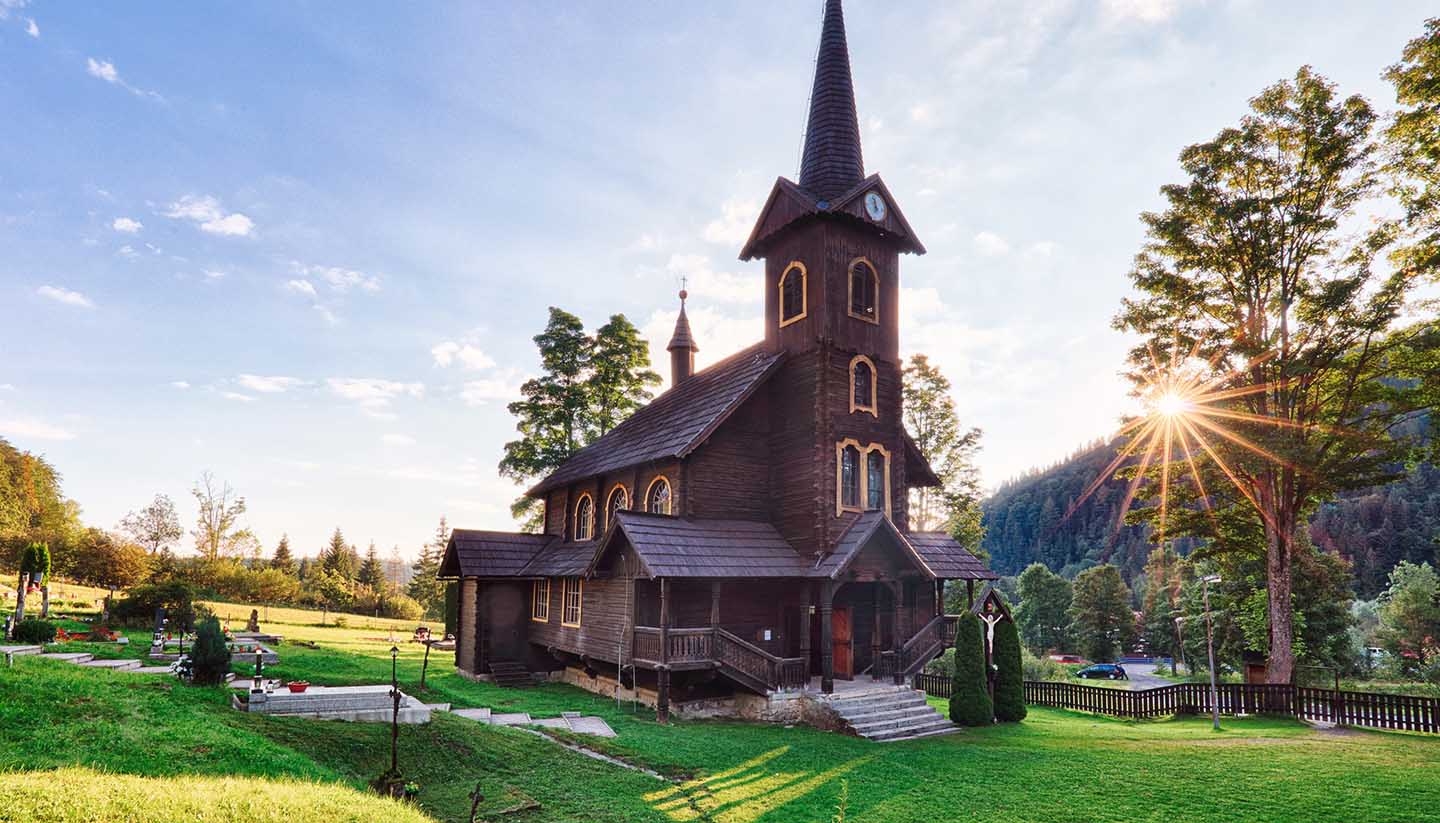

Slovakia History, Language and Culture
History of Slovakia
The territory of present-day Slovakia has been inhabited since prehistoric times and later formed part of the Roman Empire's northern frontier. Slavic peoples settled the region from the 5th to the 6th centuries, and much of modern Slovakia became part of Great Moravia in the 9th century. The arrival of the missionaries Cyril and Methodius in 863 played an important role in the development of Slavic Christianity and literacy.
Following the decline of Great Moravia, the territory was gradually incorporated into the Kingdom of Hungary, where it remained for centuries. After Ottoman forces captured much of central Hungary in the 16th century, Bratislava, then known as Pressburg or Pozsony, became the coronation city of the Hungarian kings. The region later formed part of the Habsburg Empire and, from 1867, Austria-Hungary.
After Austria-Hungary collapsed at the end of World War I, Slovakia joined the Czech lands to form Czechoslovakia in 1918. The country was broken up shortly before World War II, and a nominally independent Slovak state allied with Nazi Germany was established in 1939. Resistance to the regime culminated in the Slovak National Uprising of 1944, although German forces eventually suppressed it. Czechoslovakia was restored after the war.
A communist government took power in Czechoslovakia in 1948. Attempts to introduce political and economic reforms during the Prague Spring of 1968 were ended by a Soviet-led Warsaw Pact invasion. Communist rule finally collapsed during the peaceful Velvet Revolution of 1989, led by a broad civic movement in both the Czech and Slovak parts of the federation.
Growing political differences between Czech and Slovak leaders led to the peaceful dissolution of Czechoslovakia. On 1 January 1993, Slovakia became an independent state, with Bratislava as its capital. The country subsequently pursued closer integration with Western Europe, joining NATO and the European Union in 2004, the Schengen Area in 2007 and the eurozone in 2009.
Did you know?
• Bratislava served as the coronation city of the Kingdom of Hungary for more than 250 years, and 11 kings and queens were crowned in St Martin's Cathedral.
• Czechoslovakia separated peacefully into the Czech Republic and Slovakia on 1 January 1993, an event commonly known as the Velvet Divorce.
• One of Slovakia's oldest known toys, a small clay cart dating from the Bronze Age, was discovered at Nižná Myšľa near Košice.
Slovakia Culture
Religion in Slovakia
Roman Catholicism is the largest religion in Slovakia, alongside Protestant, Greek Catholic and Orthodox communities. A significant proportion of the population has no religious affiliation. Churches and religious festivals remain an important part of cultural life in many towns and villages.
Social Conventions in Slovakia
Slovaks tend to be polite and relatively reserved on first meeting, becoming more informal as relationships develop. A handshake is a common greeting in formal situations, while friends and family may greet more warmly. Titles and surnames are generally appropriate when addressing someone for the first time.
When invited to someone's home, a small gift such as flowers, chocolates or wine is appreciated. Shoes are commonly removed on entering a home, and hosts may provide slippers.
Visitors should dress respectfully and behave quietly when entering churches and other religious sites, particularly during services. Women are not generally required to cover their heads.
Folk traditions remain particularly visible in rural areas and during festivals, with regional costumes, music, dance, woodcarving, embroidery and ceramics forming an important part of Slovakia's cultural heritage. Wine traditions are strong in the south and west, while mountain regions have their own distinctive customs and foods.
Service charges are not usually included in restaurant bills. A tip of around 10% is customary for good service, although rounding up the bill is sufficient in cafés and more casual establishments. When paying by card, tell the server the total amount you wish to pay before the transaction is processed. Taxi fares are usually rounded up or a small tip may be given for good service.
Language in Slovakia
Slovak is the official language. Hungarian is widely spoken among the Hungarian minority, particularly in southern Slovakia, while other minority languages include Romani, Rusyn and Ukrainian. Czech is generally well understood because of the countries' shared history and the close relationship between the two languages. English is increasingly spoken, particularly by younger people and those working in tourism and international business, although proficiency may be more limited in rural areas.